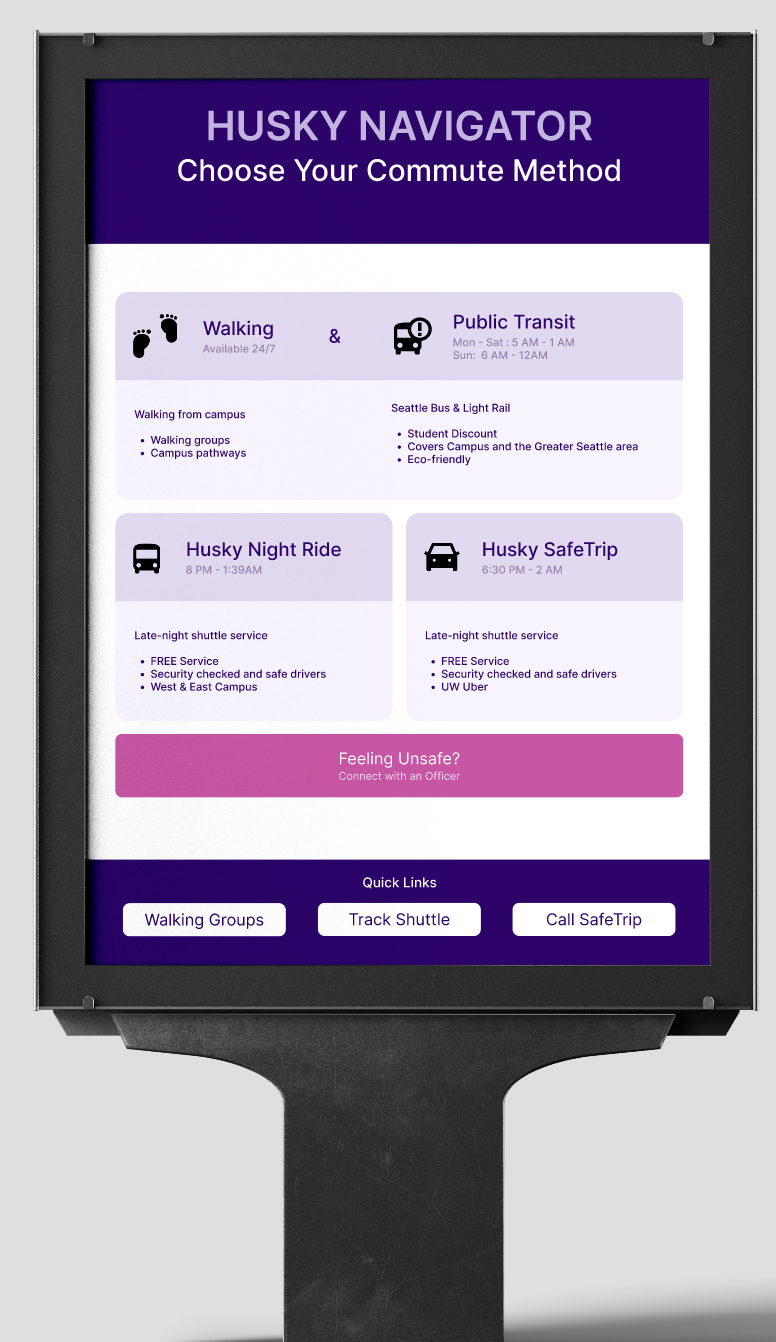
The requirements of this project were to design a physical system that addressed a social cause (such as environmentalism, mental health, etc.). We chose to focus on student safety.
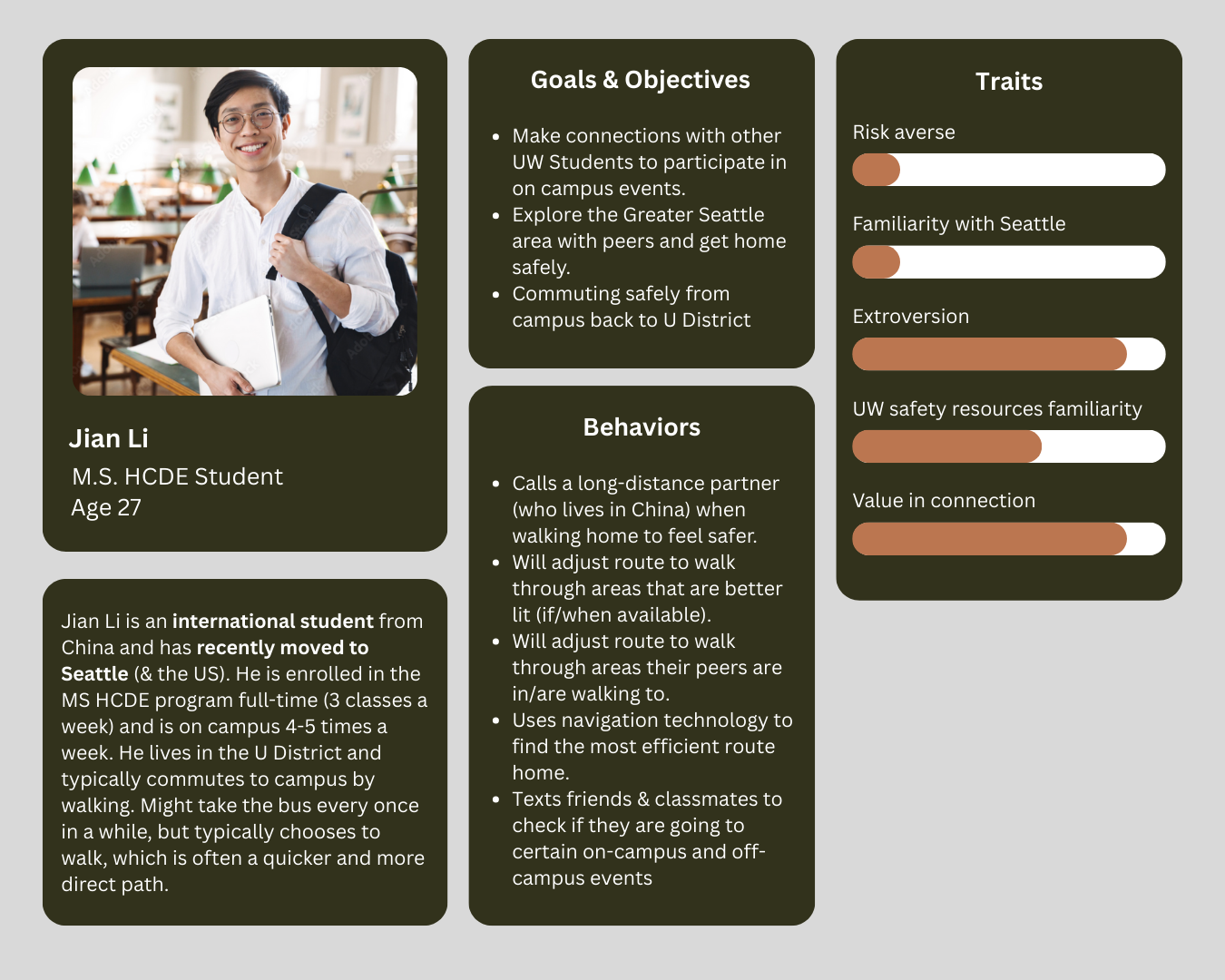
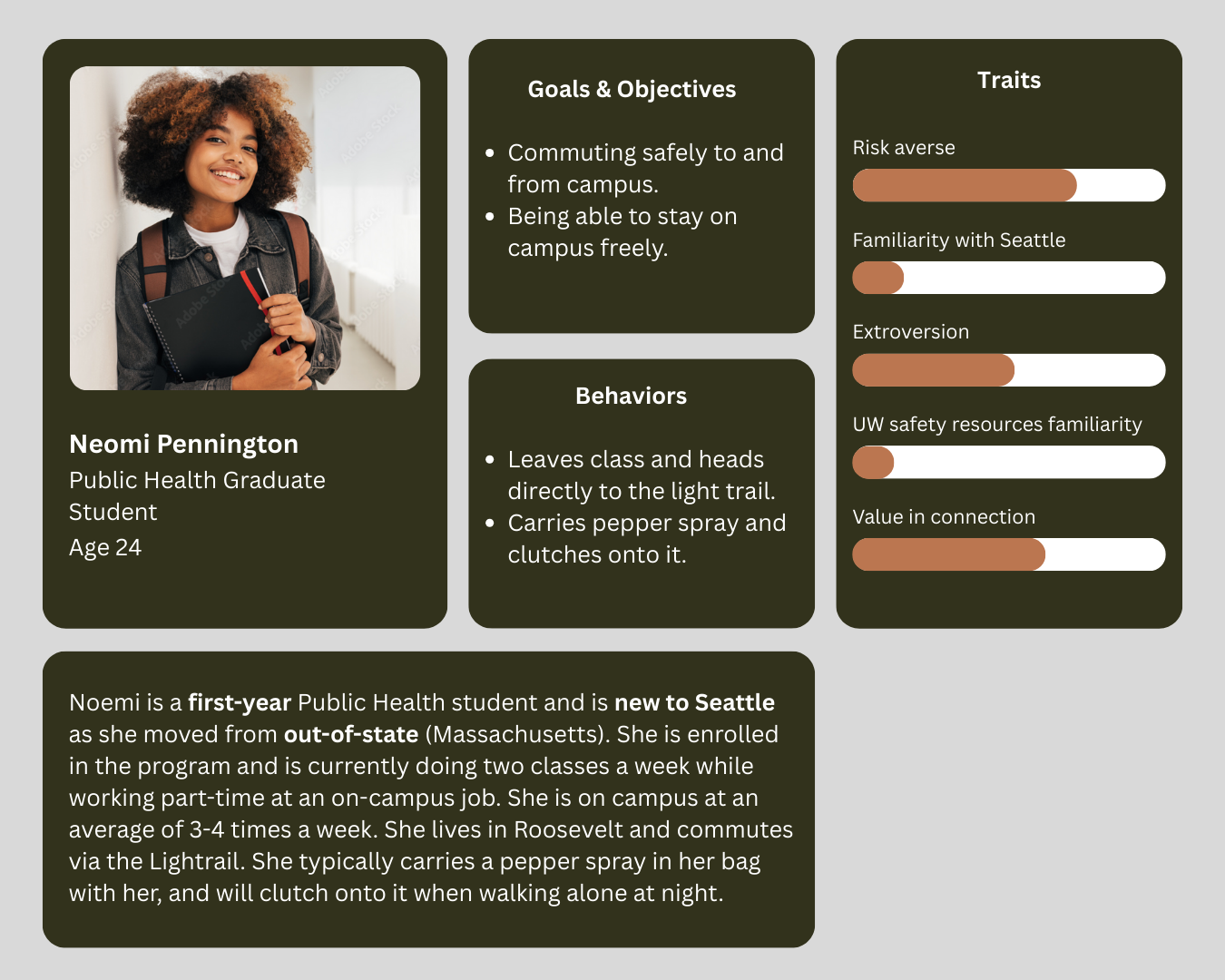
As new UW graduate students (and many of us new Seattleites) we encountered a shared problem: feeling unfamiliar with, and often unsafe on, campus. With the M.S. in Human Centered Design and Engineering course schedule being primarily composed of evening classes, there were many instances where we found ourselves commuting from campus late at night and feeling unsafe while navigating campus. Thus, we decided to focus on researching and developing a system that would make students feel safer on campus, especially at night. We initially chose to focus on graduate students as they are typically a population that is both unfamiliar with campus and has commitments that lead them to be on campus during late hours.

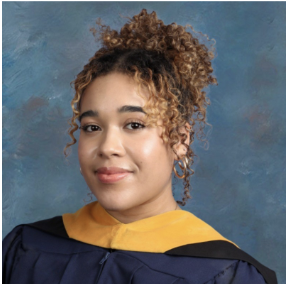
Picture of HCDE 518 Class Members and Instructors
We completed this project for HCDE 518, User-Centered Design, during the Fall Quarter (August–December) of 2025 under the instruction of Professor Doug Pyle. This course fulfills a requirement for the M.S. in Human-Centered Design and Engineering program at the University of Washington, Seattle.

We conducted In-Depth Interviews (IDIs) as our primary research method to facilitate open, in-depth conversations around feelings of safety on campus. We interviewed 7 participants who were all graduate students among a different range of programs at UW-Seattle. IDIs typically lasted 30 minutes each, where we asked participants questions regarding their typical experiences being on campus at night and how they felt regarding safety.

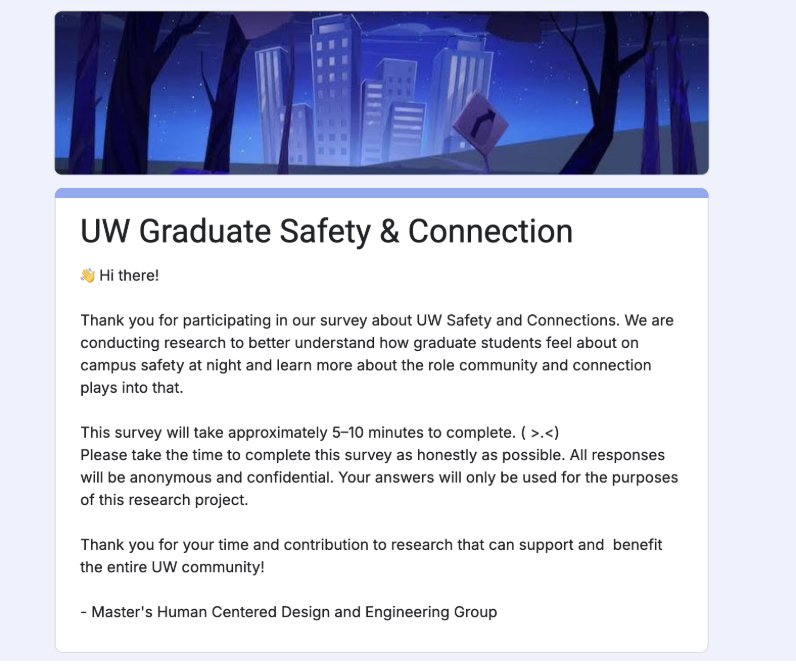
We conducted a survey as one of our research methods to gather input from a broader group of potential users. We asked around 20 questions that ranged from demographic questions, to questions regarding student safety and to connection/a sense of community with others on campus. We received 21 responses from graduate students at UW–Seattle.

We conducted direct observations using character profiles to observe students’ behaviors in natural campus settings as an initial research method. We observed 5+ students on their commute to and from campus and took notes on their behaviors and actions during the day versus at night.


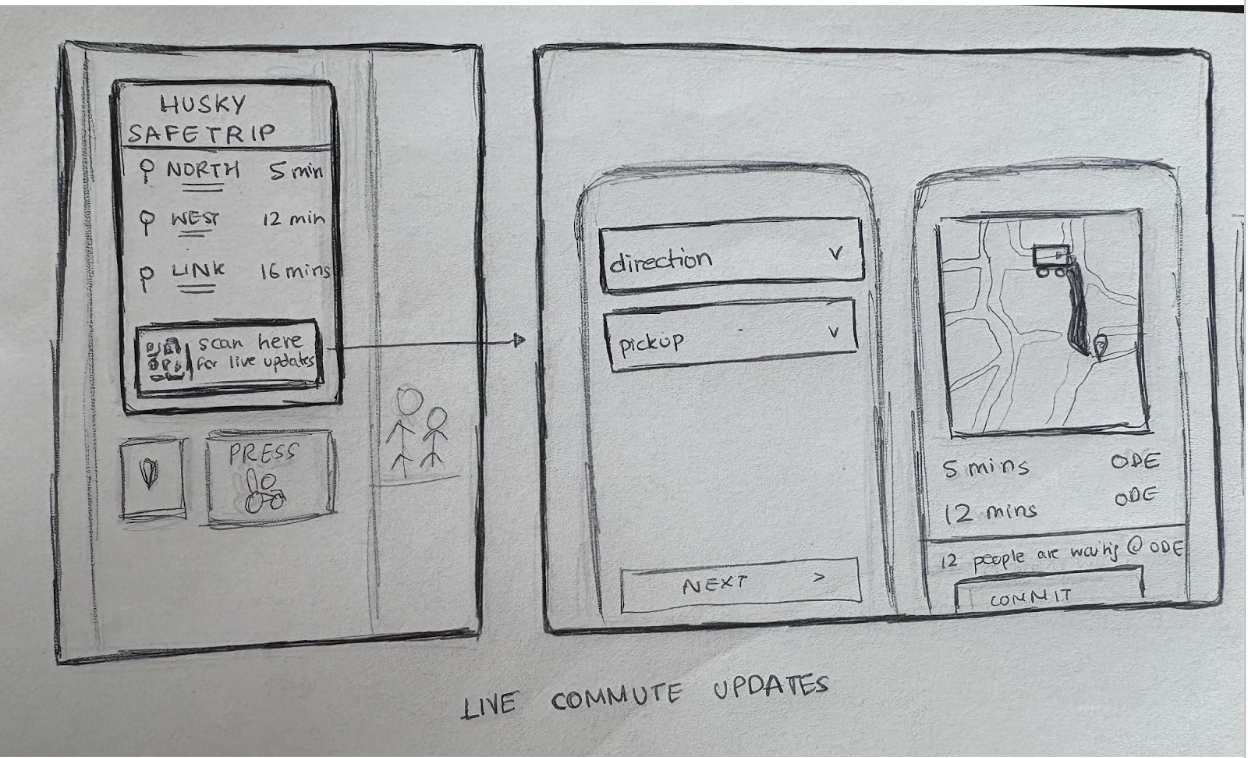
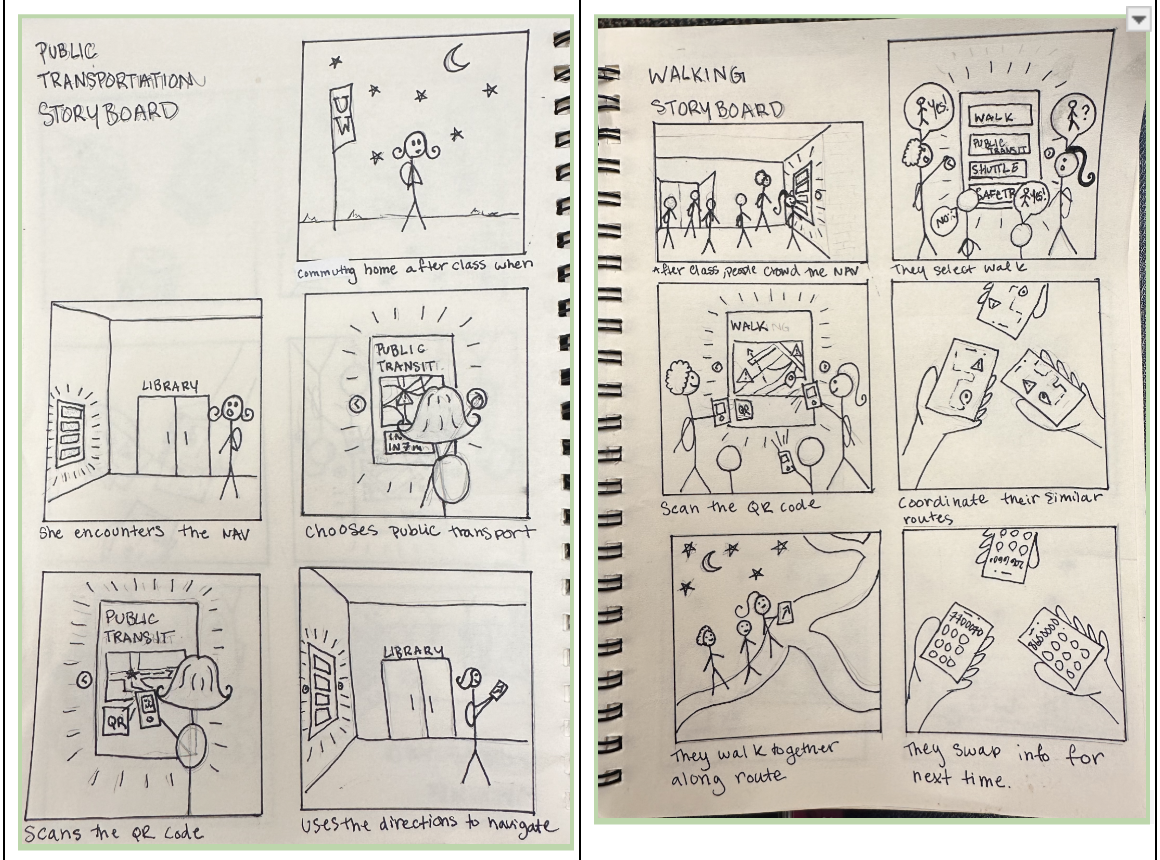
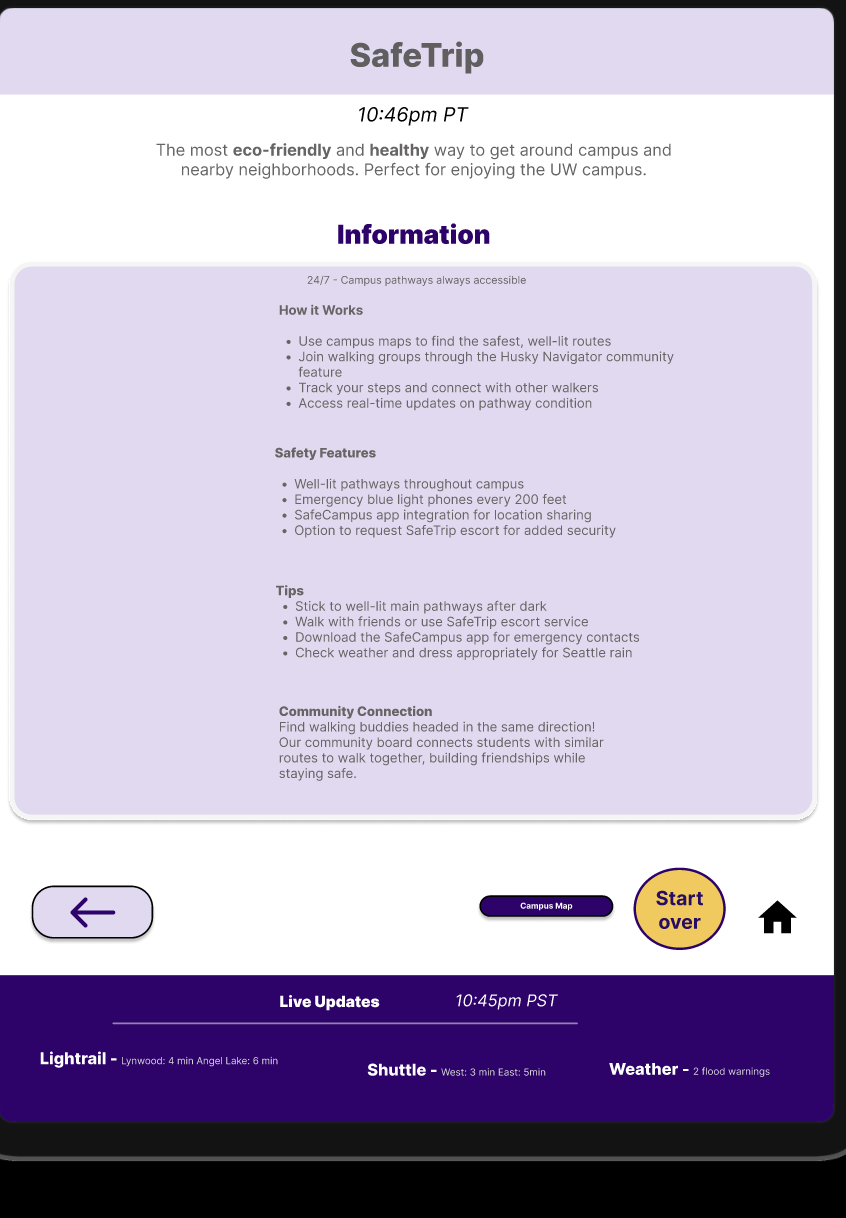
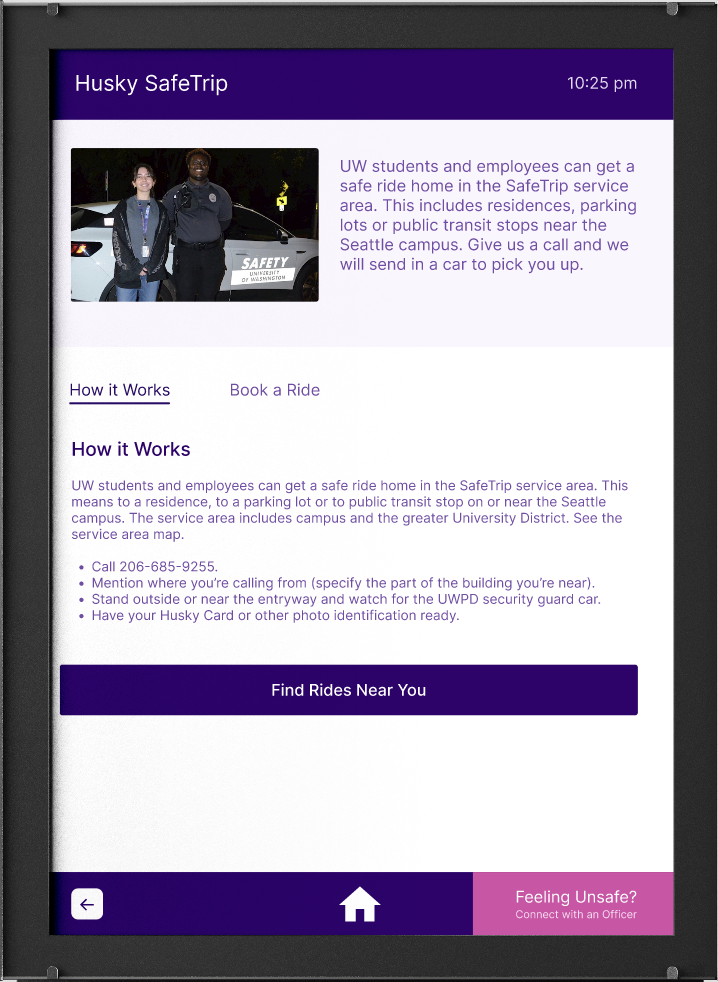
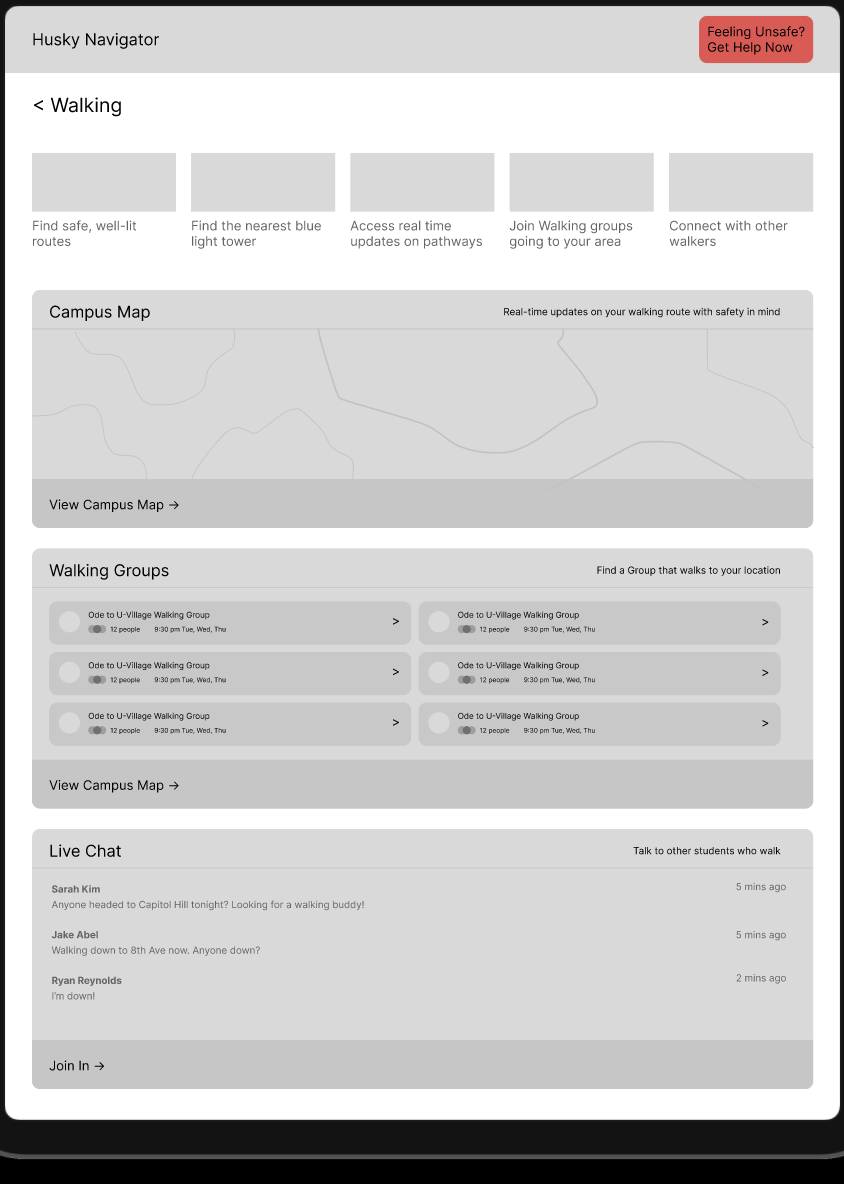
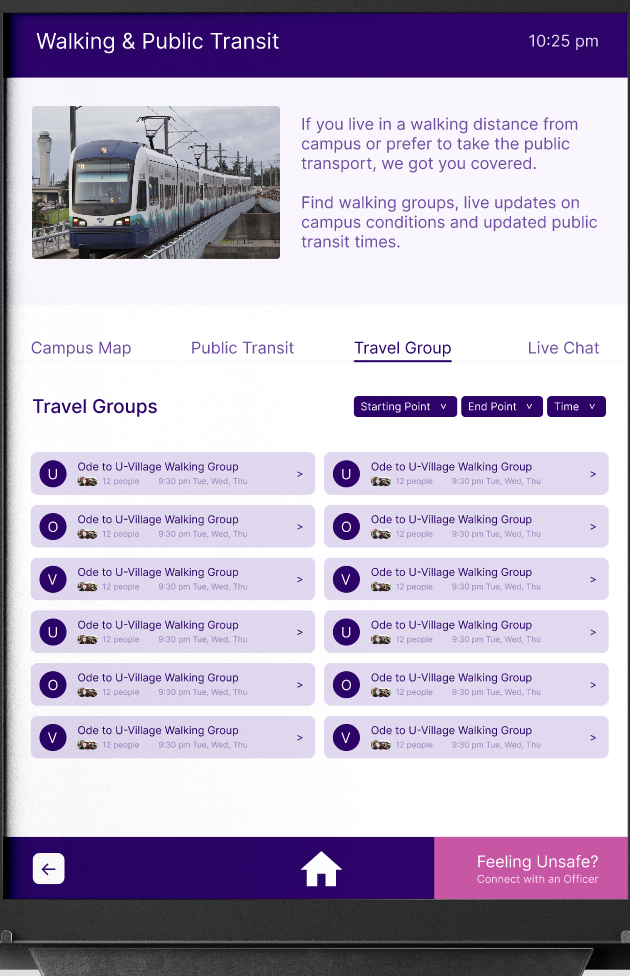
From there, we created the first med-fidelity prototype of our design which we tested among potential users.
View Med-Fidelity Prototype“ Super text heavy. If im walking late and night i want to be able to get through each screen in the shortest amount of time”
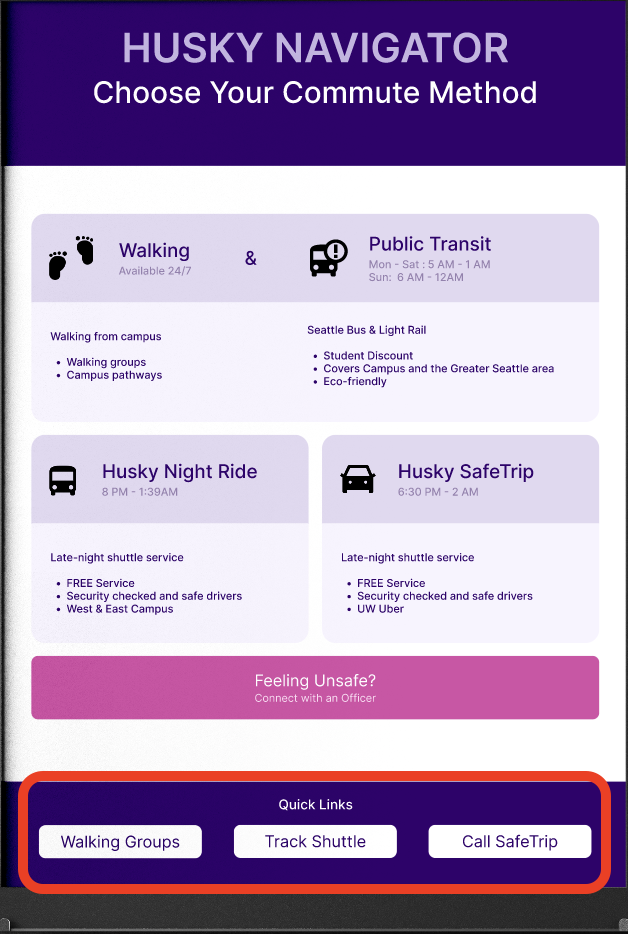
“There are 4 screens to use on the homepage. Embedding those options as quick options would be good to use as a quick thing in case i am in a rush”
“Likes the colors and visual aesthetic . Also says track your shuttle. I think that the buttons on the bottom should be bigger for navigation. And instead of feeling unsafe there should be something called emergency”